
Lessons

LESSON

Lesson Learned: Empowerment of Roma to Fight Rights Deprivation

The project allowed the grantee to introduce and test a new methodology for involving youth in the sphere of international advocacy on behalf of the Roma population in Central and Southern Europe, while maintaining its already established role in strategic litigation. The project had an impact on the youth involved. Its longer-term impact is harder to assess, as is the case in most human rights projects. Impact is often the result of a combination of events and actions, legal changes and court judgments, along attitudinal shifts on the part of decision-makers, opinion-leaders, the mass media and the public-at-large.
Project Partner
European Roma Rights Centre
Project Description
The project sought to support and empower grassroots Roma organizations in six countries in Central and Southern Europe to advocate for laws, policies and practices to combat racial discrimination, and to promote the application of international human rights standards concerning housing in national legislation. Working with Roma youth activists to lobby policy makers the grantee hoped to strengthen working relationships. A separate project component aimed to raise awareness among the Roma population of using legal means to challenge rights abuses. By focusing on the themes of anti-discrimination laws and housing and shelter rights, the project emphasized particular spheres where action was urgently required. Targeting Roma youth and young activists, the project sought to address in a practical way the weakness of Roma civil society organizations in undertaking advocacy on behalf of their own people. The litigation component finally was to demonstrate to the Roma people the viability of taking legal action as a means through which the state might be held accountable for its failure to uphold their rights.
Evaluation Date
January 2011
Theme
Country
LESSON

Lesson Learned: Training citizens on law and on institutional dialogue in the Democratic Republic of Congo

The grantee’s long-term engagement with the police and the judiciary in the Democratic Republic of Congo contributed to the project’s success, as it helped to overcome resistance to activities such as human rights awareness raising campaigns in police and military camps, and the organization of open days in courts.
Project Partner
RCN Justice & Démocratie
Project Description
The project aimed to enhance the legitimacy of the judicial system in order to reinforce democratic processes in the Democratic Republic of Congo. Specifically, the project was designed to improve the legal knowledge and sense of responsibility on the part of civil society actors by raising awareness of human rights among citizens and by improving trust between citizens and judicial institutions, as well as better liaison between judicial actors and civil society. The beneficiaries included the population of two municipalities in suburban Kinshasa, as well as families of military and police personnel housed in camps in the area; police officers, prosecutors and judges; and a group of trained NGO resource persons. The project was based on a sound strategy, which identified explicitly the institutional weaknesses that were to be addressed, and proposed realistic steps to address them. The training sessions for NGO resource persons and the seminars bringing together civil society, police and members of the judiciary were implemented to a particularly high standard, as they were both innovative in their field, and carried out with appropriate levels of skills and monitoring.
Evaluation Date
January 2011
LESSON

Lesson Learned: Empowerment of Roma to Fight Rights Deprivation

The grantee worked with individual youth trainees so that they could apply in practice what had been learned. This was an important innovation in terms of human rights training which often focus on short term training. However more personnel and resources were required to make this aspect of individual capacity development fully effective.
Project Partner
European Roma Rights Centre
Project Description
The project sought to support and empower grassroots Roma organizations in six countries in Central and Southern Europe to advocate for laws, policies and practices to combat racial discrimination, and to promote the application of international human rights standards concerning housing in national legislation. Working with Roma youth activists to lobby policy makers the grantee hoped to strengthen working relationships. A separate project component aimed to raise awareness among the Roma population of using legal means to challenge rights abuses. By focusing on the themes of anti-discrimination laws and housing and shelter rights, the project emphasized particular spheres where action was urgently required. Targeting Roma youth and young activists, the project sought to address in a practical way the weakness of Roma civil society organizations in undertaking advocacy on behalf of their own people. The litigation component finally was to demonstrate to the Roma people the viability of taking legal action as a means through which the state might be held accountable for its failure to uphold their rights.
Evaluation Date
January 2011
Theme
Country
LESSON

Lesson Learned: Engaging Civil Society in a Democratic Election Process in Sudan, Bahrain, Tunisia and Jordan

In some countries, working to promote democracy, community activists may often find themselves operating in difficult circumstances. However trying to circumvent procedures can be counter-productive. The expedient of sending trainers to one country on tourist visas when work visas were denied - placed the trainers, the trainees and the grantee at risk. When working in difficult environments, do not engage in practices that may put community activists, the grantee or other project participants at risk.
Project Partner
Al Kawakibi Democracy Transition Centre
Project Description
The project aimed to strengthen electoral processes by focusing on election monitoring by independent civil society organizations. The project established a regional expert group on elections monitoring, carried out training sessions and provided election monitoring services. In Tunisia, the group established – the Arab Working Group on Elections Monitoring - carried out a limited number of trainings in the four countries, and engaged in elections monitoring in Tunisia. Because of some political challenges, not all of the activities planned in Bahrain, Sudan, and Jordan, were undertaken. In general, training and monitoring focused more on the quantity than the quality of monitoring, a strategy that can be defended but may pose problems for longer terms sustainability.
Evaluation Date
January 2011
Country
LESSON

Lesson Learned: Training citizens on law and on institutional dialogue in the Democratic Republic of Congo

The project’s aim to increase demand for human rights protection in the Democratic Republic of Congo, by raising awareness, was sound. However the impact of this set of activities was relatively uncertain. A more deliberate strategy focusing on attitudinal change, drawing on social research and lessons from other countries, might have led to a more measurable impact.
Project Partner
RCN Justice & Démocratie
Project Description
The project aimed to enhance the legitimacy of the judicial system in order to reinforce democratic processes in the Democratic Republic of Congo. Specifically, the project was designed to improve the legal knowledge and sense of responsibility on the part of civil society actors by raising awareness of human rights among citizens and by improving trust between citizens and judicial institutions, as well as better liaison between judicial actors and civil society. The beneficiaries included the population of two municipalities in suburban Kinshasa, as well as families of military and police personnel housed in camps in the area; police officers, prosecutors and judges; and a group of trained NGO resource persons. The project was based on a sound strategy, which identified explicitly the institutional weaknesses that were to be addressed, and proposed realistic steps to address them. The training sessions for NGO resource persons and the seminars bringing together civil society, police and members of the judiciary were implemented to a particularly high standard, as they were both innovative in their field, and carried out with appropriate levels of skills and monitoring.
Evaluation Date
January 2011
LESSON

Lesson Learned: Panchayati Raj Institution Action for Community Development

The grantee phased out its operations in one of the two supported districts without a clear exit strategy. The grantee abandoned its presence in Nainital district shortly after the establishment of the federation, withdrawing leading key personnel and equipment. This jeopardized the project’s sustainability.
Project Partner
Humana People to People - India
Project Description
The project aimed to support elected members of selected village councils in Haryana and Uttarakhand States - especially women - , to fulfill their roles: planning and implementing village public works and their maintenance; local social and welfare activities; and contributing to community harmony and social justice. The findings from the baseline survey were considered for inclusion in the project plans to ensure that the reasons preventing women village council members executing their functions were addressed. The integration of both elected council members and Self-Help Group members into a single target group enhanced the project's focus on social and developmental community issues. The project achieved its long-term objective to increase the participation of women in local decision-making processes. Elected council members confirmed that they understood their rights and obligations to contribute to the improvement of local democracy. Anecdotal evidence suggests that women were empowered and that they have begun to intervene openly and more frequently during village council meetings.
Evaluation Date
January 2011
Country
LESSON

Lesson Learned: Cultivating Democratic Leaders from Marginalized Groups in Thailand

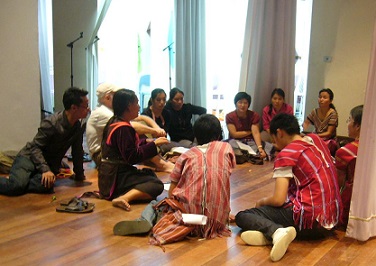
When project beneficiaries are marginalized not only by geography and ethnic origin but by mainstream politics and public attitudes, advocacy opens up a political space in which the aspirations and expectations of young people and their communities are more likely to be met. Survey results might have been of interest to the media generally - including international media - and media coverage might have contributed to putting some serious social issues on the political agenda
Project Partner
The Asia Foundation
Project Description
The project was designed to engage young people from marginalized populations in four regions of Thailand, to empower them to voice their needs, access their rights, participate in political processes, and improve their lives and communities. The grantee set out to create new leaders among young people to lead actions in the disenfranchised communities. While the project supported the implementing partners financially and to a lesser extent with expertise, it did not demonstrate significant added-value in the area of democratic development. The trainees were by and large already engaged in development work in their communities and, once the project ended, the partners and the young people continued as before. The project designers would have been more aware of this, and potentially had a chance to rethink the relevance of the design, if they had reviewed existing and earlier practice in this area, and had considered in more depth the way NGOs in the regions work and from where they get their funding. The project fell into the trap of becoming, essentially, a short-term provider of funds.
Evaluation Date
December 2010
Country
LESSON

Lesson Learned: Cultivating Democratic Leaders from Marginalized Groups in Thailand

What will be the role and responsibilities of the implementing partners at each stage of the project (and after)? Do they have the capacity to achieve these? If necessary, include capacity building/training of partners into the preliminary stages of project activity. In this case, control remained in the grantee’s office in Bangkok and was not delegated to the regions. As a result, quality control could not be guaranteed without additional personnel being allocated to the project, with resulting additional costs. This structural weakness created a corresponding imbalance between money spent at central level versus the grassroots level.
Project Partner
The Asia Foundation
Project Description
The project was designed to engage young people from marginalized populations in four regions of Thailand, to empower them to voice their needs, access their rights, participate in political processes, and improve their lives and communities. The grantee set out to create new leaders among young people to lead actions in the disenfranchised communities. While the project supported the implementing partners financially and to a lesser extent with expertise, it did not demonstrate significant added-value in the area of democratic development. The trainees were by and large already engaged in development work in their communities and, once the project ended, the partners and the young people continued as before. The project designers would have been more aware of this, and potentially had a chance to rethink the relevance of the design, if they had reviewed existing and earlier practice in this area, and had considered in more depth the way NGOs in the regions work and from where they get their funding. The project fell into the trap of becoming, essentially, a short-term provider of funds.
Evaluation Date
December 2010
Country
LESSON

Lesson Learned: Cultivating Democratic Leaders from Marginalized Groups in Thailand

If local media – for political or other reasons – are reluctant to pick up on issues, consider contacting international correspondents based in the country. To do this effectively, and to ensure that local stakeholders are not put at risk of political or personal reprisals, take on an experience media liaison officer or commission the services of a media agency for advice.
Project Partner
The Asia Foundation
Project Description
The project was designed to engage young people from marginalized populations in four regions of Thailand, to empower them to voice their needs, access their rights, participate in political processes, and improve their lives and communities. The grantee set out to create new leaders among young people to lead actions in the disenfranchised communities. While the project supported the implementing partners financially and to a lesser extent with expertise, it did not demonstrate significant added-value in the area of democratic development. The trainees were by and large already engaged in development work in their communities and, once the project ended, the partners and the young people continued as before. The project designers would have been more aware of this, and potentially had a chance to rethink the relevance of the design, if they had reviewed existing and earlier practice in this area, and had considered in more depth the way NGOs in the regions work and from where they get their funding. The project fell into the trap of becoming, essentially, a short-term provider of funds.
Evaluation Date
December 2010
Country
LESSON

Lesson Learned: Cultivating Democratic Leaders from Marginalized Groups in Thailand

Raising expectations of young people and then leaving them unmet because there is no follow-up is bad practice. Building sustainability into actions that depend on a group that is by nature evolving and likely to move on is also difficult. Consulting young people and involving them in project design, monitoring and evaluation may help. Set up “buddy” systems where more senior/experienced/older youth agreed to mentor younger people not yet of an age to participate in the project formally.

Project Partner
The Asia Foundation
Project Description
The project was designed to engage young people from marginalized populations in four regions of Thailand, to empower them to voice their needs, access their rights, participate in political processes, and improve their lives and communities. The grantee set out to create new leaders among young people to lead actions in the disenfranchised communities. While the project supported the implementing partners financially and to a lesser extent with expertise, it did not demonstrate significant added-value in the area of democratic development. The trainees were by and large already engaged in development work in their communities and, once the project ended, the partners and the young people continued as before. The project designers would have been more aware of this, and potentially had a chance to rethink the relevance of the design, if they had reviewed existing and earlier practice in this area, and had considered in more depth the way NGOs in the regions work and from where they get their funding. The project fell into the trap of becoming, essentially, a short-term provider of funds.
Evaluation Date
December 2010
Country