Lessons

LESSON

Lesson Learned: Advancing Pedestrian Rights in Georgia

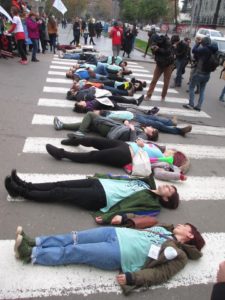
There is value in courting controversy: Strategies seen as controversial can generate more media buzz and can capture public attention.

Project Partner
Iare Pekhit
Project Description
 The project was generated by UNDEF itself, which approached the grantee and asked it to design the initiative as a response to the asymmetrical power balance between cars and humans in many post-Soviet cities. The project objective was “To create a systematic long-term approach and corresponding tools to effectively impact pedestrian strategy development and state accountability to pedestrian policy development and execution.” The project focus was timely and relevant. The project approach was innovative and agile in adapting to shifts in the context. The project achieved its objectives and was cost-efficient and well managed. Although it faces sustainability challenges, the project approach and grantee could potentially adapt and tailor their work to both international donors and other interested stakeholders. UNDEF’s flexible approach; initiative in generating project ideas; and willingness to generate a project in partnership with a small organization in response to a particular need are valuable assets in the context of this project.
Evaluation Date
January 2018
Country
LESSON

Lesson Learned: Advancing Pedestrian Rights in Georgia

Consider developing formal partnerships with research organizations or think tanks, particularly those specialized in related topics such as public transportation.
Project Partner
Iare Pekhit
Project Description
 The project was generated by UNDEF itself, which approached the grantee and asked it to design the initiative as a response to the asymmetrical power balance between cars and humans in many post-Soviet cities. The project objective was “To create a systematic long-term approach and corresponding tools to effectively impact pedestrian strategy development and state accountability to pedestrian policy development and execution.” The project focus was timely and relevant. The project approach was innovative and agile in adapting to shifts in the context. The project achieved its objectives and was cost-efficient and well managed. Although it faces sustainability challenges, the project approach and grantee could potentially adapt and tailor their work to both international donors and other interested stakeholders. UNDEF’s flexible approach; initiative in generating project ideas; and willingness to generate a project in partnership with a small organization in response to a particular need are valuable assets in the context of this project.
Evaluation Date
January 2018
Country
LESSON

Lesson Learned: Advancing Pedestrian Rights in Georgia

Compromise is often a necessary element of successful advocacy processes. Imperfect legislation for pedestrian’s rights can be better than no legislation, particularly when amendments can be introduced later.
Project Partner
Iare Pekhit
Project Description
 The project was generated by UNDEF itself, which approached the grantee and asked it to design the initiative as a response to the asymmetrical power balance between cars and humans in many post-Soviet cities. The project objective was “To create a systematic long-term approach and corresponding tools to effectively impact pedestrian strategy development and state accountability to pedestrian policy development and execution.” The project focus was timely and relevant. The project approach was innovative and agile in adapting to shifts in the context. The project achieved its objectives and was cost-efficient and well managed. Although it faces sustainability challenges, the project approach and grantee could potentially adapt and tailor their work to both international donors and other interested stakeholders. UNDEF’s flexible approach; initiative in generating project ideas; and willingness to generate a project in partnership with a small organization in response to a particular need are valuable assets in the context of this project.
Evaluation Date
January 2018
Country
LESSON

Lesson Learned: Advancing Pedestrian Rights in Georgia

Getting a law passed is only the beginning. Monitoring and further advocacy may be needed to ensure the law is implemented.
Project Partner
Iare Pekhit
Project Description
 The project was generated by UNDEF itself, which approached the grantee and asked it to design the initiative as a response to the asymmetrical power balance between cars and humans in many post-Soviet cities. The project objective was “To create a systematic long-term approach and corresponding tools to effectively impact pedestrian strategy development and state accountability to pedestrian policy development and execution.” The project focus was timely and relevant. The project approach was innovative and agile in adapting to shifts in the context. The project achieved its objectives and was cost-efficient and well managed. Although it faces sustainability challenges, the project approach and grantee could potentially adapt and tailor their work to both international donors and other interested stakeholders. UNDEF’s flexible approach; initiative in generating project ideas; and willingness to generate a project in partnership with a small organization in response to a particular need are valuable assets in the context of this project.
Evaluation Date
January 2018
Country
LESSON

Lesson Learned: Advancing Pedestrian Rights in Georgia

Consider revenue generating mechanisms including: membership fees; services fees; and private sector support; and build on project success to develop spin-off products that can be presented to international donors.

Project Partner
Iare Pekhit
Project Description
 The project was generated by UNDEF itself, which approached the grantee and asked it to design the initiative as a response to the asymmetrical power balance between cars and humans in many post-Soviet cities. The project objective was “To create a systematic long-term approach and corresponding tools to effectively impact pedestrian strategy development and state accountability to pedestrian policy development and execution.” The project focus was timely and relevant. The project approach was innovative and agile in adapting to shifts in the context. The project achieved its objectives and was cost-efficient and well managed. Although it faces sustainability challenges, the project approach and grantee could potentially adapt and tailor their work to both international donors and other interested stakeholders. UNDEF’s flexible approach; initiative in generating project ideas; and willingness to generate a project in partnership with a small organization in response to a particular need are valuable assets in the context of this project.
Evaluation Date
January 2018
Country
LESSON

Lesson Learned: Emerging Leaders of the Arab Region

Projects spanning multiple countries should provide a detailed context analysis for each country of implementation.  If the organization is not present in the countries where activities are taking place, it should be mandatory to present a partnership strategy.
Project Partner
World Youth Alliance – Middle East (WYA-ME)
Project Description
The project’s overall development goal was to “increase the civic and democratic participation of young people in the Arab region”. The specific objective was to “empower young leaders in the Arab region to play a bigger role in civic and democratic life”. The project sought to empower young leaders in five countries in the Arab region - Jordan, Lebanon, Morocco, Tunisia, and the United Arab Emirates. The project approach was based on the observation that while youth played a key role in the Arab uprisings; they continued to find themselves with limited empowerment or support to take control of their lives and futures. While the intervention rationale is broadly accurate, the project document did not include substantive contextual background for each targeted country and the project design lacked context analysis for each country. There also did not seem to be any involvement from project stakeholders and beneficiaries in the formulation and design of the project. Given the lack of contextual understanding, the project’s intervention rationale and the process for implementation also lacked essential elements to make the project relevant to the needs of the beneficiaries at the local and national levels.  
Evaluation Date
November 2017
LESSON

Lesson Learned: Emerging Leaders of the Arab Region

Networking to gather participants in training sessions should be conducted after there has been clear scoping of potential existing resources. The reliance solely on social media and personal connections limits diversity, and the lack of involvement of the grantee also limits the credibility and legitimacy of trainers to attract participants.
Project Partner
World Youth Alliance – Middle East (WYA-ME)
Project Description
The project’s overall development goal was to “increase the civic and democratic participation of young people in the Arab region”. The specific objective was to “empower young leaders in the Arab region to play a bigger role in civic and democratic life”. The project sought to empower young leaders in five countries in the Arab region - Jordan, Lebanon, Morocco, Tunisia, and the United Arab Emirates. The project approach was based on the observation that while youth played a key role in the Arab uprisings; they continued to find themselves with limited empowerment or support to take control of their lives and futures. While the intervention rationale is broadly accurate, the project document did not include substantive contextual background for each targeted country and the project design lacked context analysis for each country. There also did not seem to be any involvement from project stakeholders and beneficiaries in the formulation and design of the project. Given the lack of contextual understanding, the project’s intervention rationale and the process for implementation also lacked essential elements to make the project relevant to the needs of the beneficiaries at the local and national levels.  
Evaluation Date
November 2017
LESSON

Lesson Learned: Emerging Leaders of the Arab Region

Awareness raising activities should be strategic as well as tactical, for increased long-term effect. Activities should maximize the number of people reached, and the message should be focused and applied locally. Also include accurate indicators and means of verification in order to assess if there were any changes or impact, positive or negative, foreseen and unforeseen, on democratization.
Project Partner
World Youth Alliance – Middle East (WYA-ME)
Project Description
The project’s overall development goal was to “increase the civic and democratic participation of young people in the Arab region”. The specific objective was to “empower young leaders in the Arab region to play a bigger role in civic and democratic life”. The project sought to empower young leaders in five countries in the Arab region - Jordan, Lebanon, Morocco, Tunisia, and the United Arab Emirates. The project approach was based on the observation that while youth played a key role in the Arab uprisings; they continued to find themselves with limited empowerment or support to take control of their lives and futures. While the intervention rationale is broadly accurate, the project document did not include substantive contextual background for each targeted country and the project design lacked context analysis for each country. There also did not seem to be any involvement from project stakeholders and beneficiaries in the formulation and design of the project. Given the lack of contextual understanding, the project’s intervention rationale and the process for implementation also lacked essential elements to make the project relevant to the needs of the beneficiaries at the local and national levels.  
Evaluation Date
November 2017
LESSON

Lesson Learned: Rural Media Development for Promoting Democracy and Human Rights

The project was output driven. The participants came away with concrete published articles at the end of the process. In addition, the award and competition for best article held in both years of the project, 2015 and 2016, did much to invigorate human rights reporting by participants after the course was over and in a cost effective way.
Project Partner
News Network
Project Description
This was a well-structured project which laid the foundation for a nationwide network of journalists concerned with human rights issues, particularly in rural marginalized areas. The project was relevant and much needed given the context of human rights abuses and the suppression of the media. It was also appropriate, although there are constraints there is sufficient democratic space for human rights influenced journalism since journalists were able to write about a range of human rights issues and call duty-bearers to account. The project also met its objectives: the skills of journalists in relation to human rights issues have been enhanced, reporting on human rights has increased, and civil society capacity to understand how the media works has improved – though closer engagement between NGOs and the media could be further strengthened.
Evaluation Date
November 2017
Theme
Country
LESSON

Lesson Learned: Rural Media Development for Promoting Democracy and Human Rights

The training participants came from key local players  - representatives of national, regional and local media outlets -  mostly from the printed press. The involvement of television, radio, new social media could be increased in future incarnations given the influential role of these media modalities.
Project Partner
News Network
Project Description
This was a well-structured project which laid the foundation for a nationwide network of journalists concerned with human rights issues, particularly in rural marginalized areas. The project was relevant and much needed given the context of human rights abuses and the suppression of the media. It was also appropriate, although there are constraints there is sufficient democratic space for human rights influenced journalism since journalists were able to write about a range of human rights issues and call duty-bearers to account. The project also met its objectives: the skills of journalists in relation to human rights issues have been enhanced, reporting on human rights has increased, and civil society capacity to understand how the media works has improved – though closer engagement between NGOs and the media could be further strengthened.
Evaluation Date
November 2017
Theme
Country